
Know how modern Madrasahs are using technology, e-learning, and digital tools to make Quranic and academic education more interactive, engaging, and globally connected — preparing students for both faith and the future.
Introduction: A New Era of Learning in Madrasahs
Education is changing rapidly — from chalkboards to smartboards, from printed books to digital classrooms.
In this transformation, Madrasahs are no longer standing apart. Today’s Islamic institutions are embracing technology to make learning more interactive, accessible, and inspiring — while keeping Islamic values at the core.
At Al-Araf International Madrasah, the integration of faith and technology creates a bridge between traditional wisdom and modern innovation.
Students don’t just memorize lessons; they experience them — through visuals, sounds, and interactive platforms that make learning both meaningful and memorable.
1. Why Technology Matters in Islamic Education
Islam has always encouraged seeking knowledge through all possible means.
The Quran says:
“Say, are those who know equal to those who do not know?” (Surah Az-Zumar 39:9)
Using technology in Islamic education isn’t about replacing teachers or traditional values — it’s about enhancing understanding and expanding reach.
When used wisely, technology helps students:
- Access authentic resources from around the world
- Learn Arabic pronunciation and Tajweed interactively
- Connect Quranic lessons to real-world knowledge
- Develop digital literacy for their future careers
Simply put, it makes learning easier, faster, and more engaging — especially for young learners who are already growing up in a digital world.
2. Smart Classrooms: Blending Faith and Innovation
At modern Madrasahs, the classroom is no longer just a room with desks and a blackboard — it’s a smart learning environment.
Teachers use digital projectors, smartboards, and multimedia content to explain complex topics in fun and visual ways.
Imagine a child learning about Prophet stories through colorful animations, or understanding Arabic verbs through interactive games — that’s the power of technology.
For Quranic lessons, teachers can display digital Mushafs, play high-quality recitations, and show meaning with visuals — helping children connect emotionally and intellectually with the Quran.
This blend of faith and innovation transforms classrooms into centers of inspiration and discovery.
3. Interactive Arabic and Quran Learning Tools
Learning Arabic — especially for non-native speakers — can be challenging.
That’s why modern Madrasahs use digital learning aids that make language acquisition fun and natural.
Examples include:
- Apps with pronunciation practice and native reciters
- Audio-visual lessons for vocabulary and grammar
- QR code-enabled books that bring lessons to life through videos and songs
The “Al-Arabiyyatu Bayna Yaday Awladina” series, used at Al-Araf, is a great example — featuring colorful picture books linked to online resources and games.
With these tools, children learn Arabic as if it’s their second mother tongue — through listening, seeing, and interacting, not rote memorization.
4. E-Learning Platforms and Online Classes
One of the biggest advantages of technology is that education is no longer limited to the classroom.
E-learning platforms allow students to study from anywhere — especially beneficial for those in remote areas or with different schedules.
Online Quran classes, digital whiteboards, and virtual classrooms let teachers connect with students globally.
Assignments, quizzes, and progress tracking are all done through online portals — making learning organized, measurable, and transparent.
For parents, this means they can easily monitor their child’s progress, attendance, and achievements through digital dashboards.
This flexibility ensures that learning continues even outside school walls — consistent, personalized, and accessible.
5. Technology for Teachers: Empowering Educators
Technology doesn’t just benefit students — it empowers teachers too.
At Al-Araf, teachers receive training to use digital tools effectively. They can:
- Prepare multimedia lesson plans
- Access online libraries for authentic Islamic references
- Use student data to personalize teaching methods
For example, if a child struggles with Quran recitation, teachers can assign online Tajweed practice or audio lessons for home study.
This integration of data-driven teaching and spiritual guidance creates a powerful balance between tradition and progress.
6. Connecting Global Muslim Learners
The digital world connects hearts across continents — and so does modern Islamic education.
Today’s Madrasahs can collaborate with other institutions worldwide, conduct joint learning sessions, and expose students to diverse Islamic cultures and dialects.
Through video conferences, online competitions, and international projects, students experience the unity of the Ummah beyond borders.
They realize that Islam is a global identity, shared by millions, and that knowledge is a bridge — not a barrier — between communities.
7. Safe and Balanced Use of Technology
While technology brings great benefits, it also comes with risks — distraction, misinformation, and overexposure.
Modern Madrasahs teach digital adab (etiquette) — how to use technology responsibly and Islamically.
Students learn:
- To verify information before sharing
- To avoid harmful or unproductive content
- To use devices for learning and dawah, not entertainment alone
This awareness ensures that students grow up tech-savvy yet disciplined, using digital tools as instruments of good deeds and knowledge.
8. The Role of Parents in Digital Learning
Parents are key partners in this new model of education.
They are encouraged to support digital learning at home — helping children use online tools wisely and reinforcing lessons taught at school.
Regular parent-teacher meetings include digital updates and workshops on monitoring educational apps, ensuring a safe, collaborative, and transparent learning environment.
When parents are part of the process, technology becomes a family tool for growth, not just a school resource.
9. The Future of Tech-Enabled Madrasahs
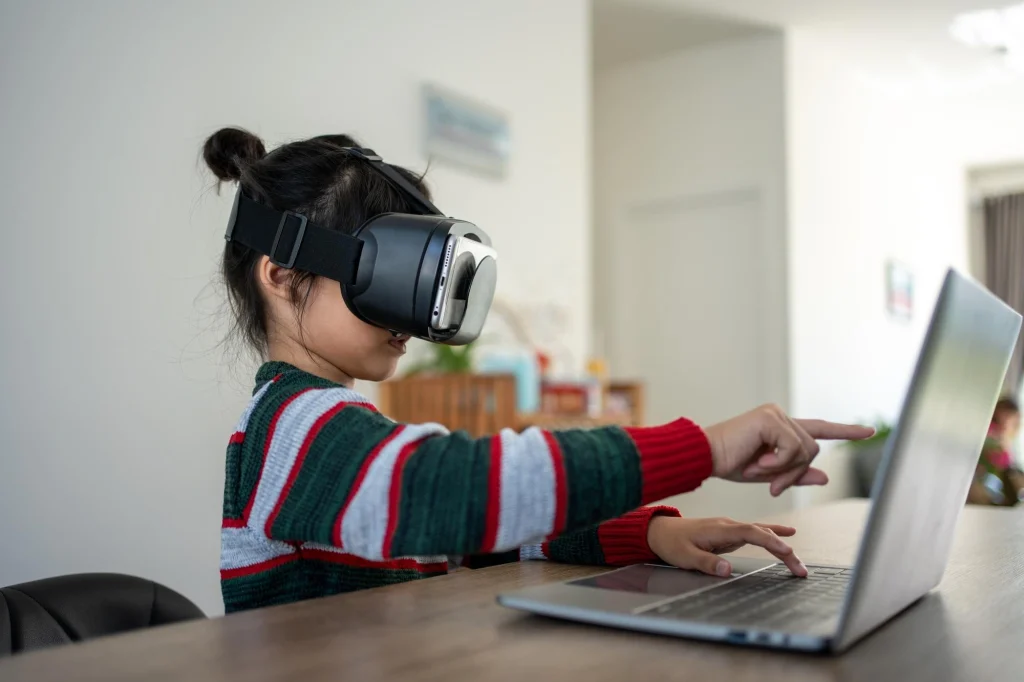
The integration of AI, virtual reality (VR), and gamified learning is already reshaping classrooms worldwide.
Future Madrasahs will use:
- AI tutors for personalized Quran learning
- VR experiences to explore Islamic history interactively
- 3D tools to visualize Arabic grammar or scientific principles
These innovations will make Islamic education even more immersive and effective — without losing its spiritual foundation.
Al-Araf International Madrasah aims to be a part of this future, creating a model of excellence that combines innovation, authenticity, and compassion.
10. Conclusion: Faith in a Digital Future
Technology is not a threat to Islamic education — it’s an opportunity.
It allows us to teach the Quran more beautifully, reach more students globally, and prepare young Muslims for a fast-changing world.
At Al-Araf International Madrasah, we believe that the best education nurtures both Iman (faith) and Ilm (knowledge) — the soul and the mind together.
By embracing technology wisely, we are not just modernizing Madrasahs — we are reconnecting education to its divine purpose: spreading light, guidance, and understanding.
The future belongs to those who can balance faith with innovation, and values with vision — and that’s exactly what the next generation of Madrasah students is learning to do. 🌙💻